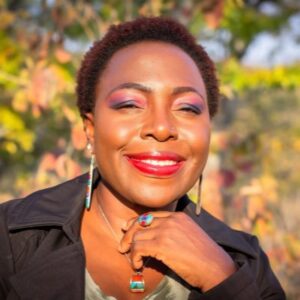
By Nyari Mashayamombe (on Facebook)
Open letter to DJ Ollah 7
Dear My Brother DJ Ollah 7 and fellow media practitioners,
I hope this message finds you well. I am writing with deep reflection and respect for the work you are doing, for the platform you have built, and for the responsibility that comes with amplifying people’s stories.
As someone who has worked closely with survivors of #genderbasedviolence for many years, and as a fellow media practitioner, I felt compelled to speak after watching your recent interview with Mai Jeremaya. I do so not from a place of animosity, but from a place of concern, shared responsibility, and hope for better practice across our industry.
1. Survivors of Gender Based Violence Deserve Safety, Not Spectacle
When a survivor sits before a camera, especially after a painful loss in court, it is not a moment to perform. It is a moment to protect. A moment to hold space with dignity, empathy, and professionalism.
In the case of Mai Jeremaya, the interview felt more like a second courtroom than a safe space. She looked shocked by some of the questions. The line of inquiry seemed to push for pain, rather than gently invite her truth. There were moments that felt more like ambush than care. This is not what survivors need. This is not what healing looks like.
Even if she reached out to you, that does not remove your responsibility to assess whether she was emotionally ready, whether she had support, or whether the timing was right. As the host and owner of your platform, you have the final say. You have the power to say, “Not now. Not like this.”
2. Ethics Are Not Optional Even for Popular Platforms
You have often said, “People want to hear this,” or “It is what the audience wants just before asking a very insensitive question.” But we must ask; at what cost? Viewers should not be entertained by someone’s trauma. We should never sacrifice the dignity of another human being for content.
It is important to respect people’s persons, their stories, their boundaries, whether they are public figures, private citizens, or survivors. Even more so with survivors of violence, who are already navigating deep wounds, shame, fear, and often isolation.
What made things even more disturbing was what followed: inviting Cynthia to your platform immediately after Mai Jeremaya’s interview. That decision reopened a fresh wound and appeared deeply insensitive. It framed the story as a spectacle, feeding the public’s appetite for drama at the expense of a survivor’s pain. It did not seem like journalism. It felt like entertainment drawn from someone’s deepest trauma.
This approach came across as exploitative and further dramatized Mai Jeremaya’s suffering. A platform that values ethics would have paused, reflected, and sought healing, not escalation.
3. Aftercare and Accountability Matter
After the interview, was there any follow up? Was she offered counseling? Was she able to review the final episode and request edits? Was anything shared on your large platform to assist her; financially, emotionally, or socially?
It felt like her pain was used for views, and when it was over, she was left alone. That should never happen. Our duty is not just to publish. It is also to protect and to follow through. This is also international standards especially for such volatile cases.
4. The Podcasting Industry Can Lead with Humanity
Ollah, you have a big voice in Zimbabwe. But your platform can be so much more than a place where people cry and confess. It can be a space of healing, of justice, of accountability — if we shift from chasing headlines to serving humanity.
You do not need to be the first to break a story. You can wait until someone is strong enough to share. You can bring in professionals to help shape the conversation with wisdom and care. You can still be bold without being harmful.
In Closing
This is an invitation to reflect, not only for your platform, but for all of us in media. Survivors are not content. People are not content. They are human beings. And how we treat their stories speaks volumes about who we are and what kind of society we are building.
Let us be known as platforms that empower, not exploit. That uphold dignity, not drama. That protect truth, not just chase views.
With care and respect,
Advocate Nyari Mashayamombe
Women’s Rights Advocate and Media Entrepreneur